Level 4
57 Fort Street
Auckland Central
Auckland 1010



With significant reforms to the Equal Pay Act 1972 taking effect in 2025, employers are operating in a landscape that continues to shift, as expectations around fairness, clarity, and accountability evolve. At the same time, international momentum toward greater pay transparency and pay gap reporting is increasing, placing New Zealand at a noteworthy point in that broader journey.
For people leaders, these issues are no longer confined to policy discussions. We are seeing questions of pay equity and transparency surfacing in everyday ways, through candidate expectations, employee conversations, and renewed scrutiny of pay decisions made years, or even decades, earlier. As a result, transparency is increasingly being viewed not solely as a compliance consideration, but as a strategic factor influencing trust, engagement, and an organisation’s ability to attract and retain talent.
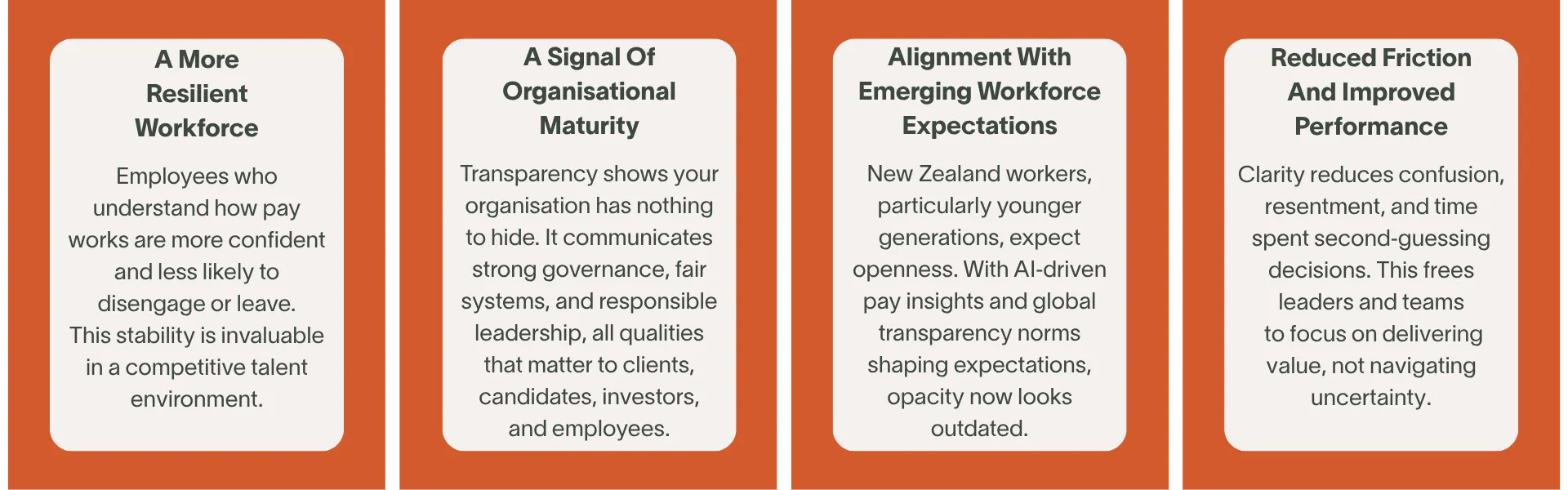
What does this shift mean in practical terms? Experience from organisations in New Zealand and overseas suggests that thoughtful openness around pay can play a meaningful role in building a more confident, stable, and productive workforce:
It Aligns With What Many Employees Value Most
Keeping salaries hidden can sometimes favour those who are more confident negotiators. Transparent pay practices can help level the playing field, encouraging salaries to be grounded in clearer, more consistent frameworks.
Even when pay‑increase budgets are tight, employees are more likely to accept outcomes when they understand the rationale. Transparency reduces speculation and reinforces confidence that pay decisions follow fair, organisation‑wide logic.
It Builds Trust, Engagement, And Reduces Risk
When employees understand how pay is set and why differences exist, much of the ambiguity that can undermine morale is removed. Being able to see the structure, methodology, and criteria behind pay decisions helps build trust in leadership. This clarity, in turn, supports stronger engagement, as people are more likely to feel valued, recognised, and treated fairly. Transparency also provides reassurance that pay reflects genuine contribution and role expectations, rather than negotiation strength or unseen biases.
Discussions with our some of our client organisations that embrace clearer pay practices report benefits such as:
It Improves Candidate Attraction And Hiring Efficiency
Today’s candidates expect clarity. Publishing salary ranges signals honesty and maturity, and helps jobseekers quickly assess whether a role aligns with their expectations.
Without this information, candidates often rely on online review platforms, which may paint an incomplete picture. Being upfront allows your organisation to control the narrative, strengthen its EVP, and stand out in a crowded market.
Pay transparency isn’t just a compliance exercise. For many organisations, it’s an opportunity to build trust, reinforce culture, and support stronger performance, with meaningful benefits across risk, engagement, and workforce outcomes:
Transparency is often misunderstood. In practice, it does not usually involve:
For leaders, this means transparency is a design choice, not a loss of control. The goal is informed clarity, not perfection. It means explaining how pay works, not sharing individual pay packets. It means applying criteria consistently, not removing flexibility. It means building fairness into the system, not rushing into a new model overnight.
There’s no single way to approach pay transparency - it tends to work best when it’s introduced gradually and with intention. The following examples highlight some of the approaches we’re seeing in practice:
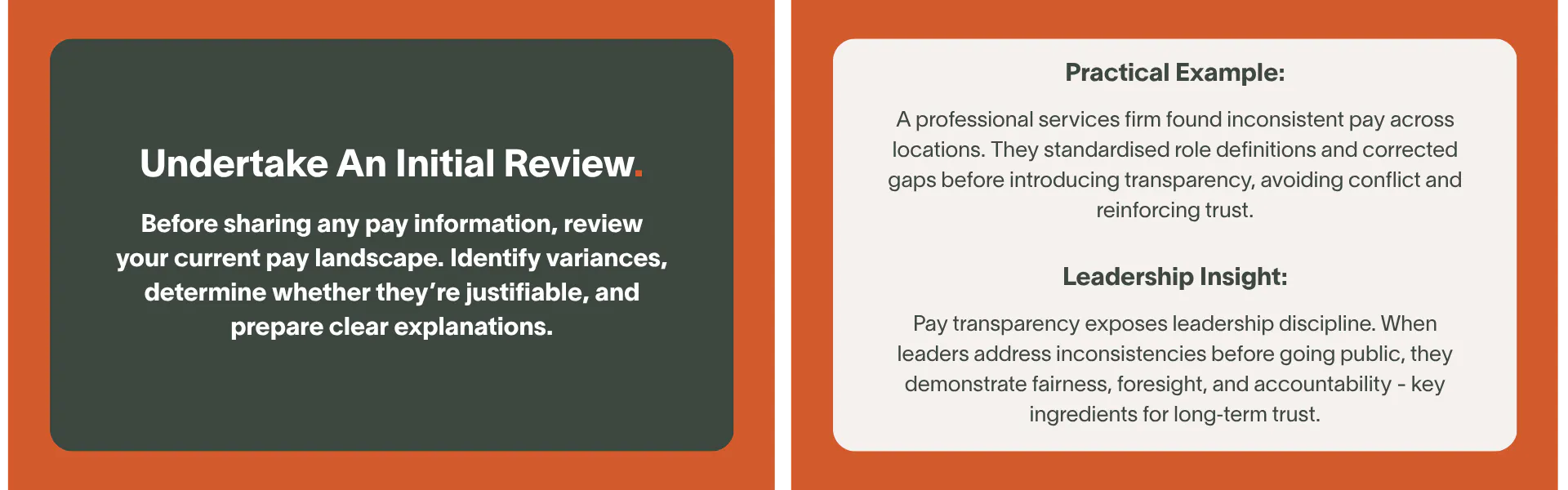
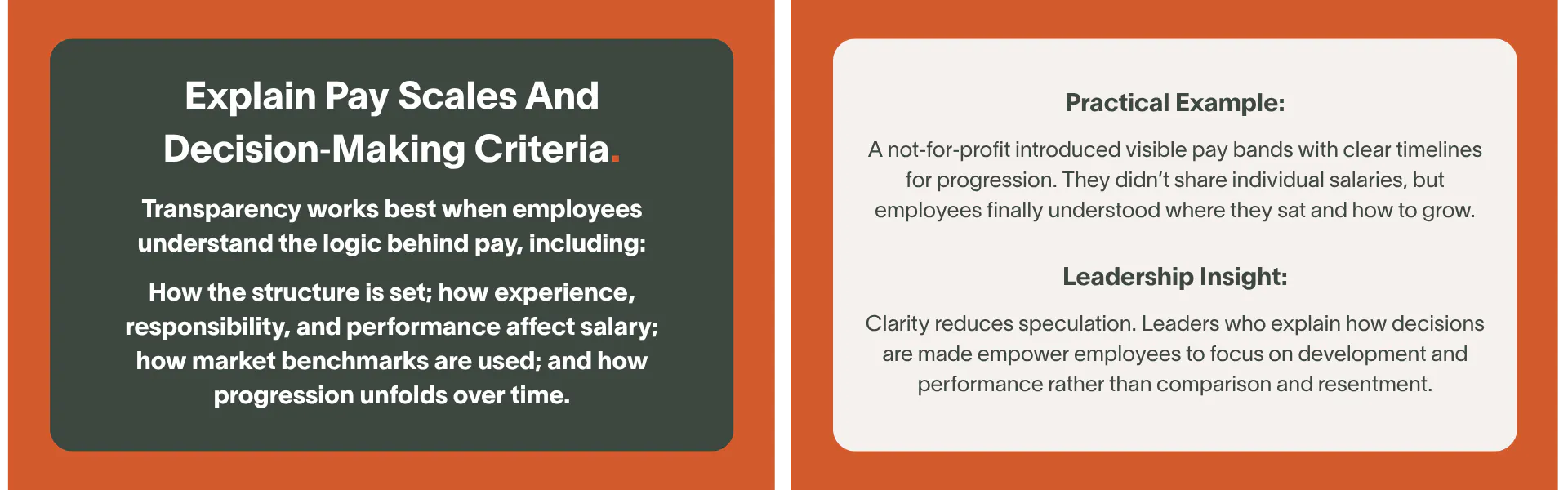
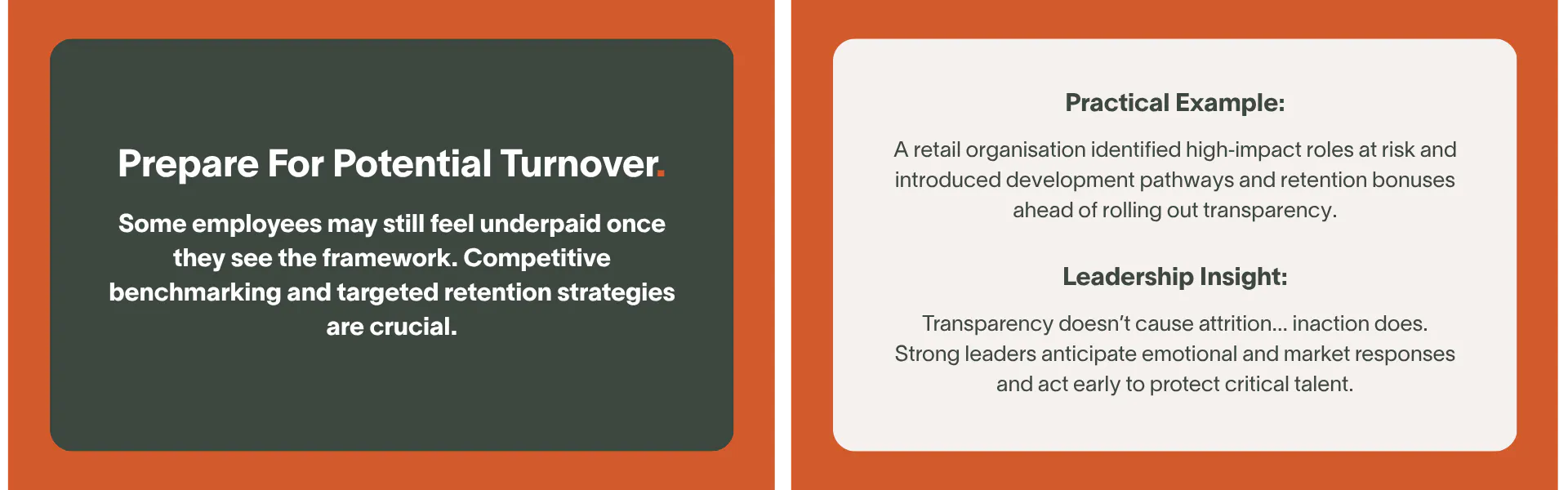
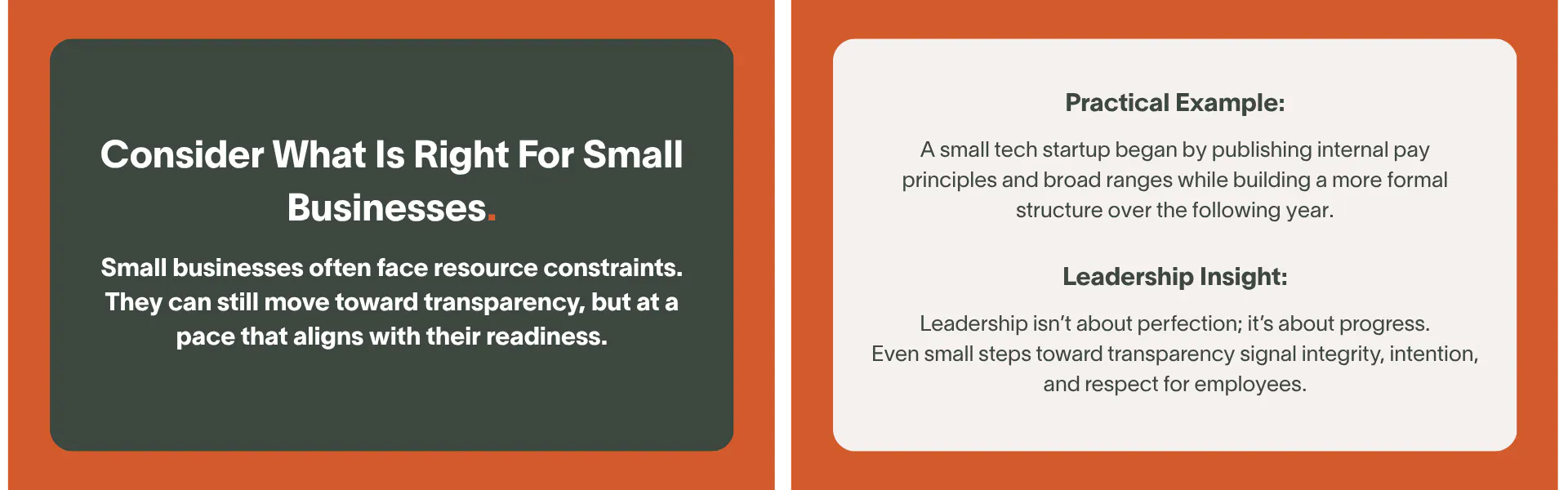
The above considerations show that transparency doesn’t need to be disruptive. With a thoughtful, staged approach, organisations can turn potential risk into an opportunity for stronger culture, clearer conversations, and more sustainable performance - often starting with:
Our Expertise


Level 4
57 Fort Street
Auckland Central
Auckland 1010
© 2026