Level 4
57 Fort Street
Auckland Central
Auckland 1010



Every leadership appointment is a people decision. But it is also a strategic investment in the future of the organisation.
The leaders chosen today will shape how effectively a business executes its strategy, navigates change, and captures future opportunities. That is why, before any search begins, organisations should first ask:
What do we need this role to achieve next?
The answer requires more than a review of the job description. It means understanding where the organisation is heading and what it will need from its leaders to succeed. While the conversation often starts with the candidate, the most effective appointments begin with the role itself.
This is particularly important because markets evolve, priorities shift, and organisational needs change. A fresh assessment of the role helps ensure it remains aligned with what the organisation needs next.
Before deciding who to hire, organisations must first be clear about what they need that person to achieve.
A role should not be defined solely by its title or historical responsibilities. Effective search processes start with a clear understanding of the outcomes the organisation is seeking and the challenges it needs the role to address.
By taking this approach, organisations can move beyond historical assumptions and focus on the capabilities required for the future.
In practice, that can mean rethinking a role in several important ways:
In each case, the title may remain unchanged, but the demands of the role have evolved. The quality of the appointment frequently depends on whether that shift has been clearly recognised and articulated.
With that in mind, it is worth considering what this role needs to achieve now that it did not need to achieve when it was last filled.
In many of the searches we support, the greatest value comes not from refining the candidate brief, but from helping stakeholders gain clarity on the outcomes the role is expected to deliver.
Defining those role expectations is only part of the equation. It's equally important to consider whether the opportunity itself is positioned to attract the calibre of leader required to deliver them.
At senior levels, the strongest candidates are drawn not only to compelling organisations, but to opportunities where they can make a meaningful and visible impact.
One question that often brings clarity before going to market is:
Would the best candidate see this as an opportunity to create real value?
This encourages you to look beyond the title and assess whether the scope, influence and organisational support behind the role are genuinely aligned with the calibre of leader you hope to attract.
To answer that honestly, organisations should consider a number of factors:
In our experience, the strongest senior searches are supported by mandates that are both ambitious and credible. Candidates can clearly see why the role exists, what the organisation is trying to achieve, and where they can create value.
Once the role has been clearly defined, the next step is establishing the outcomes required for success.
Stakeholders can often describe the qualities they are seeking: someone strategic, commercially astute, influential, collaborative, resilient, or transformational. While all are important, they tell only part of the story.
The real measure of success lies in the impact the leader has and the results they deliver. While the specifics vary by role, the examples below illustrate how success can be defined:
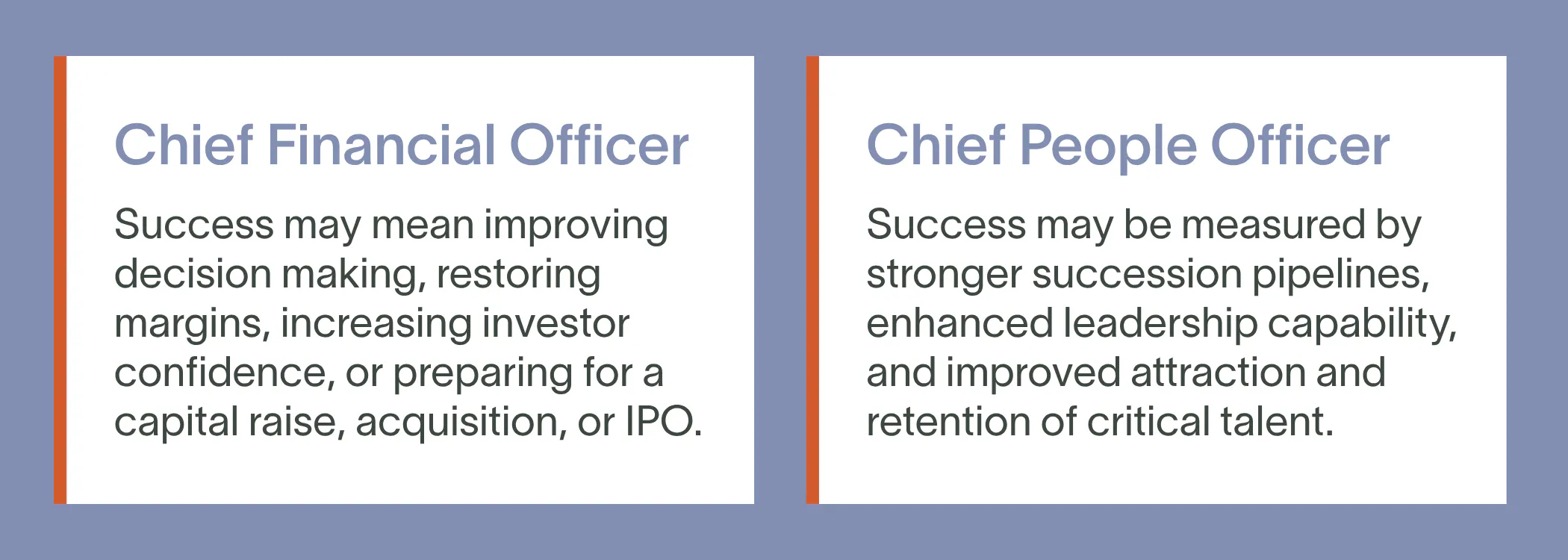
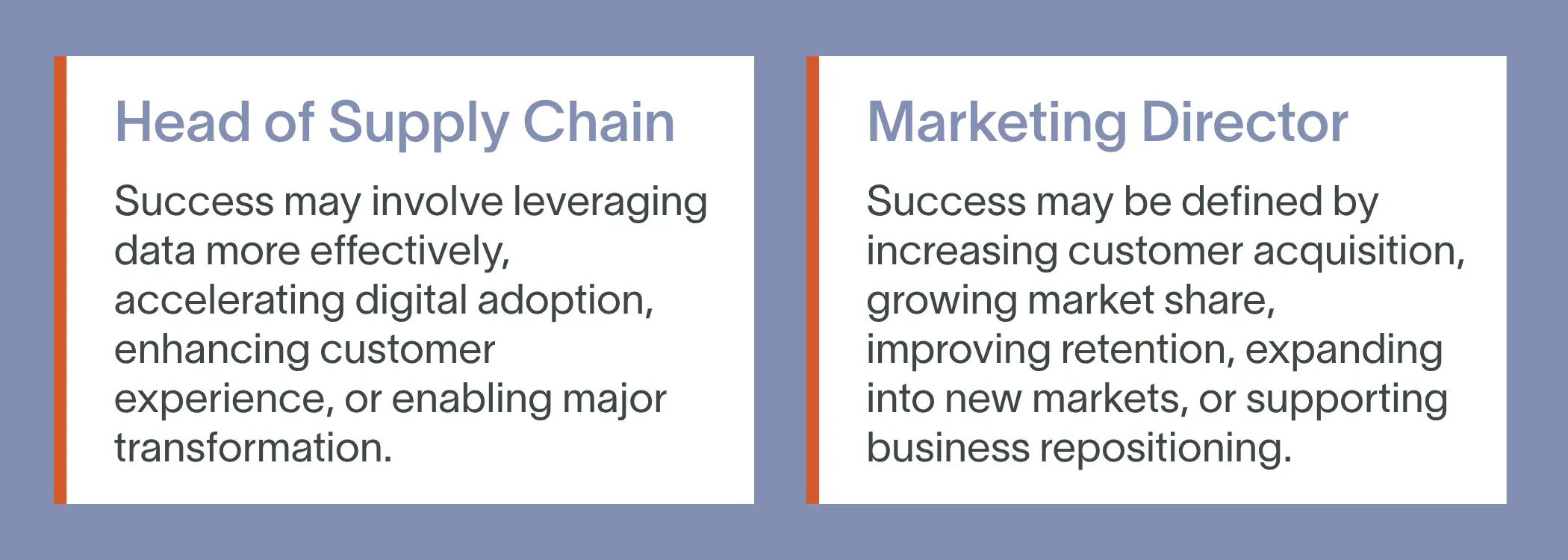
Clarity around role success provides a valuable foundation. Building on that, organisations should also seek to understand how different stakeholders view success and the role this appointment will play in achieving it.
At a high level, there is often broad agreement. Most stakeholders are looking for someone with credibility, sound judgement, strategic perspective, and the ability to lead others effectively.
When the conversation turns to priorities, however, different perspectives can often emerge:
These perspectives are not necessarily competing views. They typically reflect different experiences of the organisation and different priorities for its future.
To better understand where views align and differ, it can be useful to ask each key stakeholder to independently answer the following four questions:
The objective here is not to achieve identical answers. In fact, the greatest value often comes from understanding where responses differ. Those differences can reveal important assumptions about priorities, challenges and the future this appointment is expected to help create.
Great leadership appointments do more than fill a vacancy. They influence what comes next for the organisation.
Executive hiring is one of the few decisions that can influence strategy, culture, performance, and organisational capability all at once, and it deserves the same level of rigour and reflection as any major strategic investment.
The quality of the appointment is often determined long before the first candidate enters the process. The organisations that make the best leadership decisions are those that invest the time to gain clarity on what they need, why they need it, and what success will require.

Our Expertise


Level 4
57 Fort Street
Auckland Central
Auckland 1010
© 2026